
If you’ve been dealing with persistent heel pain, tennis elbow, or an Achilles tendon issue that just won’t clear up despite resting and stretching, you’re not alone. Chronic soft tissue injuries can be notoriously slow to heal because tendons and ligaments naturally receive far less blood supply than muscle tissue.
When standard rest and exercises hit a plateau, Shockwave Therapy—scientifically known as Extracorporeal Shockwave Therapy (ESWT)—offers a non-invasive, evidence-based solution to reset the healing response.
What Is Shockwave Therapy?
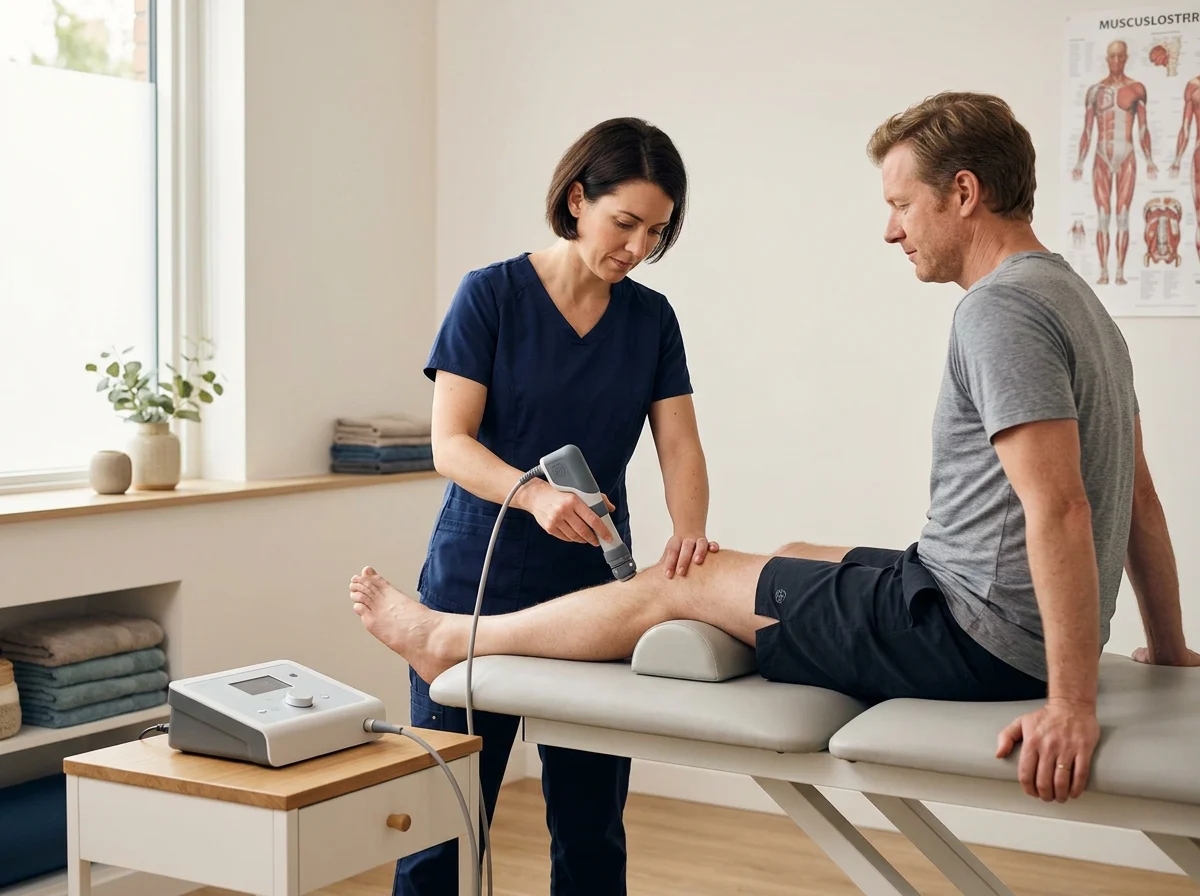
Shockwave Therapy in Towcester
Despite the intimidating name, shockwave therapy involves no electrical shocks. Instead, a handheld applicator delivers high-energy acoustic (sound) waves through the skin directly into injured or inflamed tissues.
These high-energy pressure waves penetrate deep into targeted tissues, triggering microscopic biological responses that restart a stalled healing cycle.
How Does It Work?
Shockwave therapy works primarily through a process called mechanotransduction—turning physical pressure signals into biochemical responses at the cellular level:
Stimulates Angiogenesis: Acoustic waves create micro-trauma in stubborn tissues, encouraging the body to sprout new blood vessels (neovascularization). Improved blood flow delivers essential nutrients and oxygen required for tissue remodeling.
Breaks Down Calcification: For conditions like calcific shoulder tendinitis, shockwave energy helps break up fibrous or calcified deposits so the body can naturally reabsorb them.
Desensitizes Nerve Endings: The rapid energy pulses disrupt substance P (a neurotransmitter responsible for carrying pain signals to the brain), offering immediate short-term pain relief.
Boosts Collagen Production: Collagen is the structural building block of tendons and ligaments. ESWT stimulates collagen synthesis, transforming weak, disorganized repair tissue into strong, healthy fibers.
Conditions commonly treated at our Physio clinic in Towcester
Shockwave therapy is particularly effective for chronic tendinopathies that haven't responded to standard care:
Plantar Fasciitis Sharp heel pain, especially during the first steps in the morning
Achilles Tendinopathy Stiffness, pain, or swelling at the back of the ankle
Patellar Tendinopathy"Jumper’s Knee"—pain just below the kneecap
Lateral Epicondylitis"Tennis Elbow"—pain on the outer forearm near the elbow joint
Calcific Shoulder Tendinitis
Sharp shoulder pain with restricted overhead mobility
Greater Trochanteric Pain Chronic hip pain aggravated by walking or sleeping on your side
What to Expect During a Session
Targeting the Area: Your therapist Palpates the area to locate the exact point of maximum tenderness.
Applying Gel: Ultrasound gel is applied to the skin to ensure smooth transmission of acoustic waves with minimal energy loss.
Delivering Treatment: The handheld probe is moved over the target zone for 3 to 5 minutes, delivering roughly 1,500 to 2,500 pulses per session.
Post-Treatment Routine: Treatment involves 5 to 6 sessions, spaced 5 to 7 days apart to give tissues time to respond and rebuild between visits.
What does it feel like? You will feel a rapid tapping or thumping sensation. While it can feel slightly uncomfortable over inflamed spots, your therapist can adjust the intensity level to keep it completely manageable.
Shockwave as Part of Your Rehabilitation Plan
Shockwave therapy is not a single "magic wand" fix—it works best when integrated into a comprehensive rehabilitation program. While shockwave stimulates the cellular healing response, customized loading exercises (isometric, eccentric, and heavy slow resistance training) ensure the newly forming tissue develops the strength and resilience needed for daily activities and sports.
Ready to Move Without Pain?
If chronic tendon or foot pain is holding you back from your favourite activities, shockwave therapy might be the missing piece in your recovery. Contact our clinic in Towcester today to schedule an evaluation with our Chartered physical therapists.